
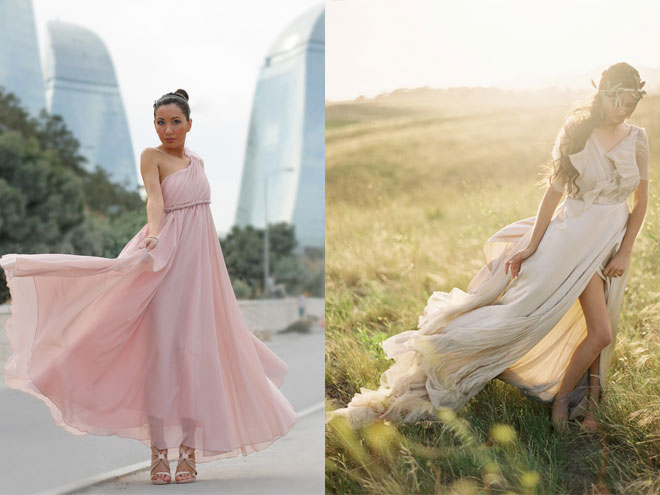
The classic Greek-style dress has long been an essential part of many fashion collections. The cut of this type of dress allows women of all body shapes to include it in both formal and casual outfits. But what is the secret behind this sophisticated cut?
What is a Greek-style dress?
Stylists describe this style as exceptionally feminine and ethereal, capable of transforming both evening and daywear into something divine. The elegance lies primarily in the distinctive cut of the dress.
What sets Greek-style dresses apart is the graceful and majestic way they highlight a woman’s silhouette. Almost all variations gently hug the chest line and flow freely along the curves of the waist and hips, making them a perfect choice for fuller figures.
Despite their recognizable features, designers constantly strive to create the most flawless versions of this dress. They often start with the classic one-shoulder design, featuring an elegant drape or a striking brooch, with a length that reaches the ankles. This design emphasizes the waist with a wide belt.

Another variation of the Greek dress features completely bare shoulders and a rounded neckline. This model may have either a standard or a high waist, both highlighted by a belt and matching trim around the neckline and waist. The length of the dress can range from knee to ankle.
The more modest versions of the Greek-style dress have a round neckline that nearly covers the neck, resembling a regal necklace. In some designs, this is replaced with a straight collar decorated with pleated or ruffled fabric. The upper part of the dress typically has a loose fit, subtly tracing the body’s natural curves. For more formal occasions, there are even models with necklines that plunge all the way to the waist.

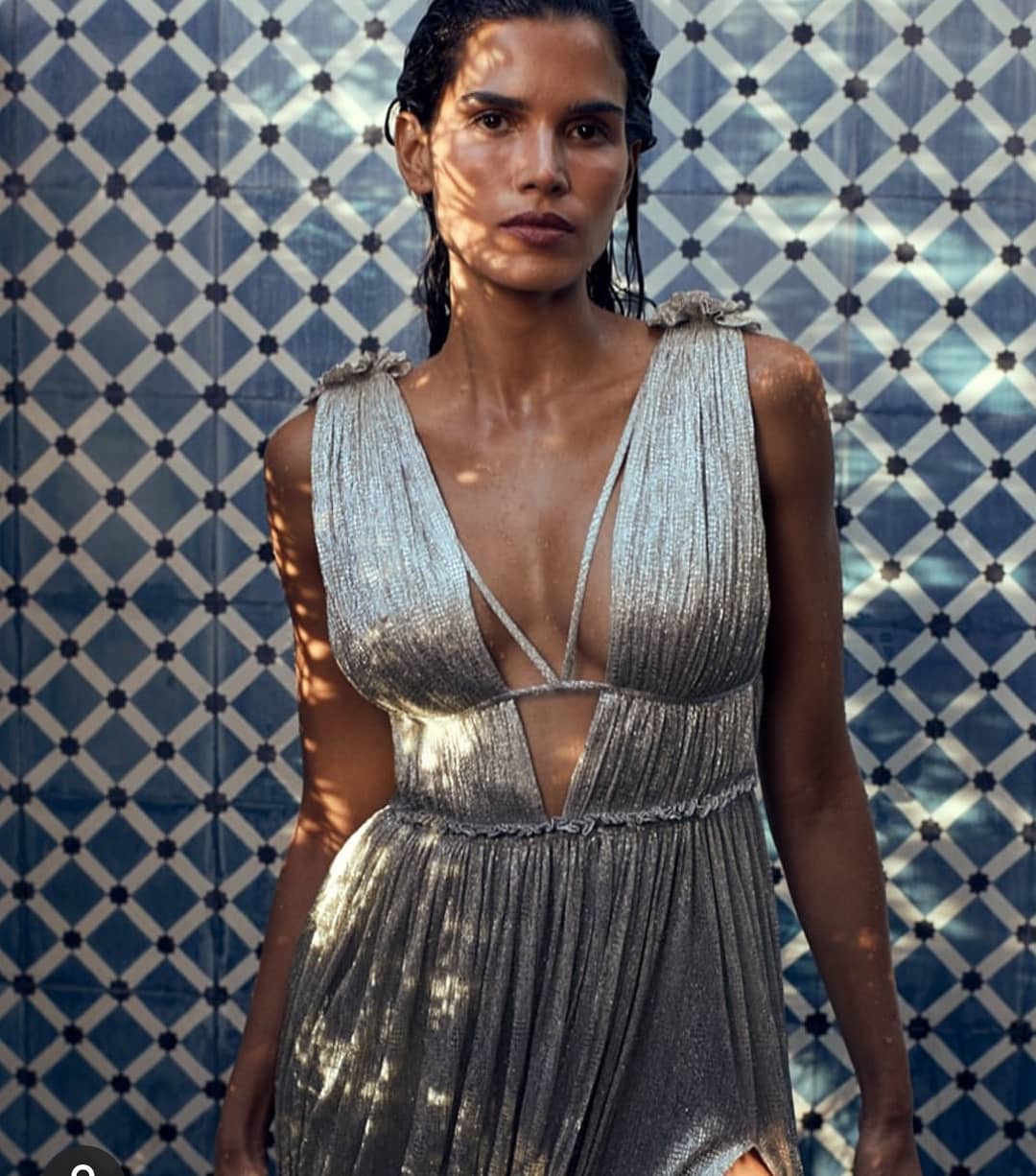
The immense popularity of this dress inspires designers to continually create new variations. For ladies who don’t like exposing their shoulders, there are Greek-style models that cover both the shoulders and arms. Such a dress can resemble a tunic, with a length ranging from mid-thigh to floor-length.
It should be noted that the hem length varies significantly within this style. While classic models typically reach the floor, many other options are perfectly acceptable. The skirt may end at mid-thigh, at the knee, or lower down the leg. Designers also actively incorporate asymmetry and distinctive hemlines into their creations.
The tunic dress is a classic element of Greek fashion. Its main difference from other models is that it’s only occasionally adorned with drapery.
What fabrics are best for Greek-style dresses?
All models of this style—whether casual or formal—are crafted from flowing fabrics. These materials are easy to drape and allow for the addition of decorative elements. Popular choices include silk and its variations like satin and chiffon. Occasionally, lace is used, though typically layered over one of the aforementioned fabrics to enhance the sense of femininity and lightness. Fashion designers often embellish these dresses with embroidery, gemstones, pearls, or beads to highlight the elegance of the cut. Lightweight knits are also sometimes used as a base, especially for tunic-style dresses.
What color should the dress be?

White is a signature color of the Greek-style dress. It is often combined with contrasting elements in shades such as red, gold, or black. Other hues can also be used—blue, pastel pink, sky blue, pearl, ecru, and gold tones all soften the dress’s formal appearance. These colors, when paired with luxurious fabrics, add elegance and celebration to the look. For everyday versions, designers frequently introduce prints—floral, animal, fantasy, or ethnic motifs—to bring a fresh and modern feel.
On a slightly different note, feel free to check out our article about colors according to your zodiac sign.
Recommendations for choosing the right dress
We are confident that a Greek-style dress can flatter almost any body type—provided the woman selects the right model for her figure.

If you have an inverted triangle body shape, the ideal choice would be a Greek-style dress with a flattering neckline and a clearly defined waistline.

If your figure resembles a "pear" shape, we recommend opting for a long model with an over-the-shoulder curve or bell-shaped sleeves.

For women with an apple-shaped figure, Greek-style dresses featuring a collar that mimics a necklace and a well-defined waist are the most flattering.

If you have the perfect hourglass shape, then you have no restrictions—most models will suit you wonderfully.

Another important rule to keep in mind: the fuller your figure, the smoother and lower the hemline of the dress should be.
Choose a dress that fits the occasion.
Shorter models are more appropriate for daytime wear, while floor-length styles are ideal for special events and formal occasions.

Greek-style casual dresses.
If you've decided to wear a Greek-style dress in your everyday life, we recommend opting for simpler models and cuts that do not emphasize the bust.
Pair the dress with a short denim or leather jacket, flat or heeled sandals, and a hat for a complete look.
If you're aiming for a romantic appearance, a Greek-style dress is a must. You can style it with delicate lace vests, light sweaters, or knitted tops. Suitable footwear includes flats, sandals, or slip-ons.
If you want to make a stunning impression at a holiday party, an evening or prom dress in Greek style will highlight your femininity. However, be cautious—it's easy to cross the line into overly dramatic if not styled thoughtfully.

If you’ve chosen a Greek-style dress for graduation, we recommend a floor-length version with an asymmetrical hem or a model that ends at the knee line. Styles with an open back and draped slits are also great options. However, dresses with exposed midsections are best reserved for other occasions. Along with the dress, be sure to select the right shoes—open high-heeled sandals work well with chiffon, while silk models pair best with closed-toe shoes.

Take a look at the Greek-style cocktail dress. It is short, with a hemline that should not fall below the knees. In addition to draping, designers often add cascading frills, asymmetrical sleeves (including one-shoulder designs), and elongated peplums to these styles. Such a dress is a statement piece—so keep the hairstyle minimal to avoid overpowering the look.

What jewelry matches such a dress?In general, this dress doesn't favor jewelry, as it may draw attention away from the garment itself. However, if you love accessories, here are a few options:
Material → Choose jewelry in gold or bronze tones. This will enhance the ancient Greek style. Silver is not recommended here!
What bracelets are allowed? → We've all seen movies that portray ancient Greece, and you've probably noticed what kind of bracelets the beautiful Greek women wore. Exactly! Cuff-type bracelets will boost the impact of the Greek-style dress. You can wear one on either arm or even on both.
What earrings to choose? → If the dress has bare shoulders, go for long dangling earrings shaped like leaves or drops.
Can I wear a necklace? → Yes, you can if the dress has a deep neckline, but opt for a very delicate chain with a pendant.

What shoes match a Greek-style dress?For more formal occasions, wear strappy high-heeled or platform sandals in gold, beige, or white. For casual looks, choose flat sandals in a gladiator style.

This model is universally flattering for most body types. However, it works best for women with a "pear", "apple", or inverted triangle shape – it highlights the waist and conceals imperfections.
Light and airy fabrics are the hallmark of this dress. Materials like silk, chiffon, satin, or fine knitwear create the typical flowing, draped silhouette of this model.
For everyday wear – knee-length or mid-length. For formal occasions – opt for long or asymmetrical models.
It’s not a requirement for a dress to have sleeves to be considered Greek-style. You can choose a one-shoulder model, thin straps, draped sleeves, or go sleeveless. It all depends on your taste and preferences.
Stick to simple items: a thin gold or silver belt, lightweight sandals, and small jewelry. Don’t overdo the look – the dress is perfect on its own and "speaks for itself".